
Why Every Pricing Structure is Vulnerable & How to Deal With This Challenge: The Case of “Unlimited” Price Offers
The pricing features that appeal most to customers are often the same ones that expose the business to negative outcomes.

Summary. Every pricing structure has a vulnerability that usually lies in the feature that makes it attractive to customers. In this post, I argue that the vulnerability arises from the compromise every structure must make between the inherently incompatible business objectives of maximizing revenue or profit and the customer objectives of receiving the best possible value from the purchase, making it susceptible to customer exploitation and therefore unsustainable over the longer term. I explore the case of unlimited price offers in four different settings, where the promise of abundance often attracts heavy users who affect the pricing structure’s sustainability to a disproportionate extent. The managerial challenge is to identify the pricing structure’s exposure, monitor the extremes, impose targeted constraints, and adjust the structure when the vulnerability becomes too large to manage.

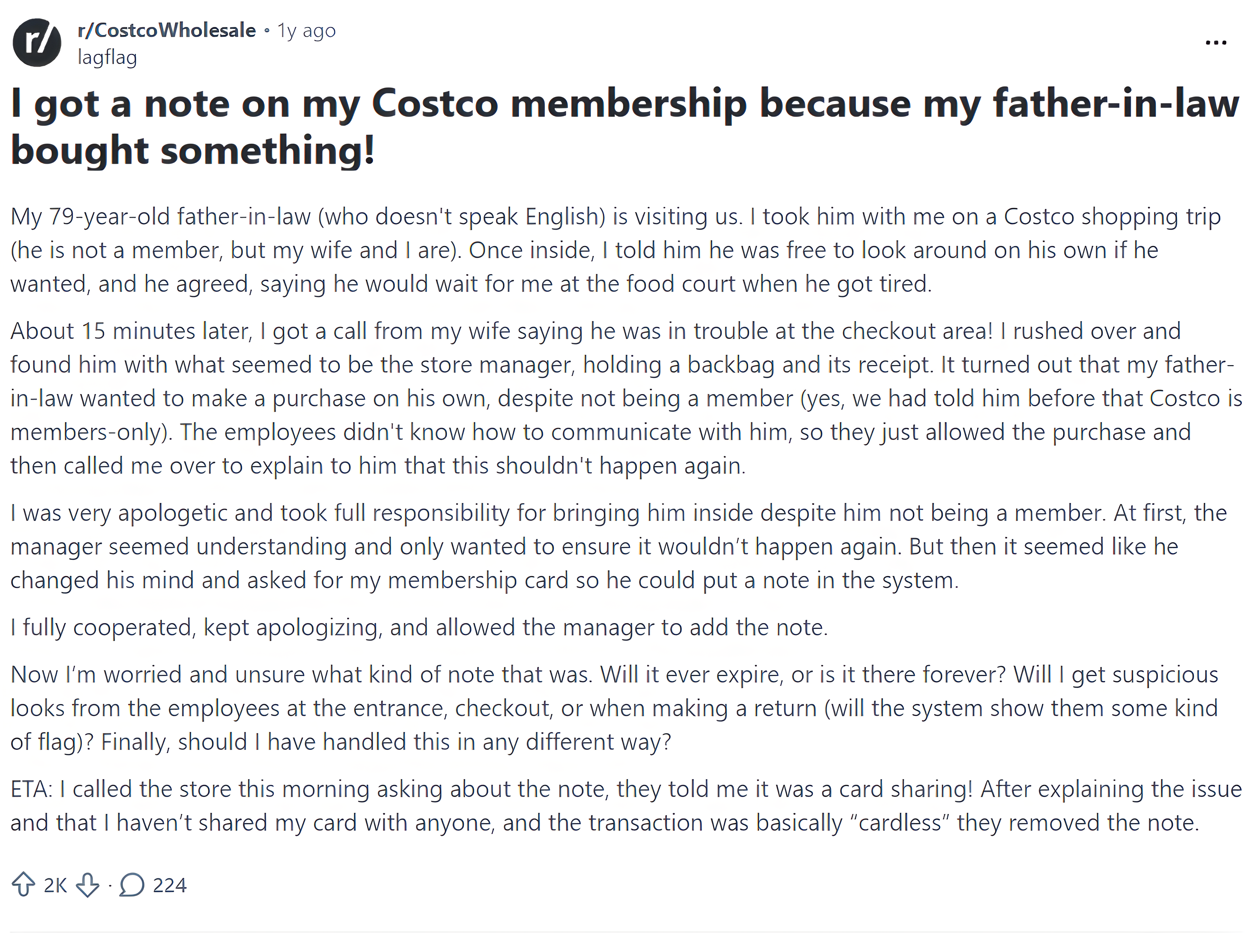
I have argued before that every pricing structure has at least one feature or constraint (and often more than one) in which customers’ interests are misaligned with those of the business. Even a beloved brand like Costco has a decidedly dark side to its pricing strategy, which manifests in indirect ways, including cracking down on membership sharing, policing self-checkout, and aggressively upselling Executive memberships, all of which significantly degrade the customer’s shopping experience at Costco stores. The features of the pricing structure that contribute to revenue and profits often work against customers’ interests, even for the best-intentioned and high-performing companies. The opposite is also the case, and this is what I want to explore in detail in this post.
Just as the features that make a pricing structure profitable can work against customers, the features that make it appealing to customers can work against the business. The vulnerability of pricing structures runs in both directions and is a structural characteristic of every pricing structure. Every pricing structure is a compromise between the business objectives of maximizing revenue or profit and the customer objectives of receiving the best possible value from the purchase. These goals are inherently incompatible, making every pricing structure vulnerable to customer exploitation and therefore unsustainable over the longer term.
Thus, when decision makers choose between pricing structures, flesh out a chosen structure fully, or tweak a structure that is working for them, they should always be attuned to its vulnerability, considering carefully where the vulnerability lies, who is most likely to exploit it, and what the business can do about it without destroying the core appeal that makes the pricing structure suitable for that application. In this post, I want to explore this idea in detail, using the case of “unlimited” price offers, and provide some practical ideas for pricing decision makers to diagnose and manage the vulnerability inherent in their pricing structure.
Why every pricing structure is vulnerable
A pricing structure’s job is to present prices, price changes, and offers in a way that attracts customers by highlighting one kind of value delivered by the offering. The highlighted customer value can be predictability (e.g., our prices won’t surprise you), simplicity (one plan, no decisions to agonize over), commitment (a free or cheap trial), generosity (Pay-What-You-Can), fairness (everyone pays the same), status (premium pricing), or some other thing. In each case, the core feature on which the pricing structure is built is the same feature that the business must then defend. Let’s consider several pricing structures briefly, including premium pricing, fairness-based pricing, a two-part tariff, and tiered pricing, to understand this point.
Premium pricing. A premium pricing structure commonly used by luxury brands is characterized by very high prices (either by using a high mark-up factor or applying value-based pricing to establish prices). The job of this structure is to convey status by setting very high prices to signal exclusivity and attract customers who value being part of a select few. However, the more successful the brand’s premium pricing is, the more people want its products, thus diluting the very scarcity on which the structure rests. Premium pricing’s vulnerability lies in the fact that its core feature (high prices used to create scarcity) works in such a way that it undermines itself when it is effective (high prices increase demand). If scarcity is maintained despite demand, the brand doesn’t grow, many interested customers are left disappointed, and the price premium is earned by secondary market sellers; if it is relaxed, the brand’s status appeal diminishes as it becomes more easily accessible. A premium pricing structure sits on the razor’s edge between scarcity and growth.
Fairness-based pricing. A fairness-based pricing structure that promotes uniform pricing for a product or service is also vulnerable, just in a different way. A uniform, everyone-pays-the-same policy attracts customers who value the even-handed treatment by the business. But it also means that the business gives up the ability to price discriminate and to use a more complex price structure to match differences in customer valuation and increase revenue and profit. What’s more, despite the financial underperformance of this pricing structure, it may still leave the business exposed to a competitor that could peel away its best customers with strategic pricing tactics, such as targeted discounts or sign-on incentives. A fairness-based pricing structure sits on the razor’s edge between evenhandedness and profit.
Two-part tariff. Next, consider the two-part tariff structure commonly used for gym memberships, warehouse clubs, and amusement parks. This structure usually involves a one-time access fee plus a lower price for purchase, use, or consumption, as the case may be. For customers, the appeal of a two-part tariff lies in the sense that, once you have access, purchasing and using it will be significantly cheaper than with competitive options. But this very feature also creates vulnerability: because the most profitable part of the structure is often the access fee, the structure only works for the business as long as customers cannot share their access or game the system. The Costco case study is a perfect illustration of this vulnerability: customers are constantly trying to game the access fee component, and Costco is constantly trying to police that gaming, which ultimately degrades the customer experience. A two-part tariff pricing structure sits on the razor’s edge between enforcement and customer value.
Tiered pricing. Tiered pricing or versioning, the pricing structure behind many SaaS and streaming plans, is also vulnerable. For customers, the core appeal of this pricing structure is the ability to self-select. Specifically, the business offers a menu of options, and customers sort themselves into the tier that best fits them, thereby attracting business from customers with diverse needs. However, the menu can be gamed: premium-tier customers may try to downgrade to the middle tier(s) if they realize they are not using the premium-tier features. Likewise, premium-tier features can alienate other customers if these tiers are not chosen carefully. In both cases, the core differentiating feature and the point of vulnerability overlap with one another. The feature that delivers value to the customer and attracts them in the first place also constrains the business, exposing it to negative outcomes. A tiered pricing structure sits on the razor’s edge between customer friendliness and customer reactance. Next, let’s consider the broad applicability of this principle using the case of “unlimited” price offers across four very different industries.
Case Study: The vulnerability in “unlimited” price offers
Unlimited offers are ubiquitous. The logic behind an unlimited price offer is the flat-rate bias. Customers prefer a fixed price to a metered one because it feels simpler, safer, and more generous, and because watching a meter run spoils the pleasure of whatever it measures1. The marketing literature has documented this effect, describing it as customers ending up “paying too much and being happy about it.” Just as important as the appeal of the unlimited offer is the type of customer it attracts.
Whether implicitly or explicitly, unlimited-price offers are sold to two types of customers simultaneously. The first, and larger, group is (or should be) under-users. These customers like the security of a fixed price and the idea of abundance, but in fact, they under-consume the offering, and many would do better off under a usage-based pricing structure2. The second group is heavy users, who over-consume and extract surplus economic value from the offer. The offer’s economics rest entirely on the first group: as long as enough light users stay below the average, the numbers work, and the pricing structure remains sustainable3. But the sales pitch of an unlimited offer tends to attract the second group, the heavy users who push the average up and strain those same unit economics.
This is where the unlimited offer follows the vulnerability principle described above in an unusually clear way, with almost nothing standing between the appeal and the exposure. We can think of “unlimited” as a reverse coupon. An ordinary coupon sorts customers by price sensitivity in the seller’s favor. Specifically, only those price-sensitive shoppers who are willing to clip, search, or remember it will claim the discount, whereas those who don’t care about getting the lowest possible price won’t make the effort4. An unlimited price offer does the opposite. It is an open-ended discount on the marginal unit, worth the most to exactly the customers who cost the seller the most. The seller never has to find the heavy users; the heavy users find the offer. That is why an “unlimited” offer is far more persuasive than an offer like “1,000 uses included,” even when a 1,000-use cap would be more than enough for an overwhelming majority of buyers. While a generous cap reassures the average customer, the unlimited offer works especially well for extreme users.
All-You-Can-Eat Buffets
AYCE buffets are the prototypical example of the unlimited price offer, involving visible, physical, and immediate consumption. Once they have paid, customers are limited only by their appetite, while the restaurant incurs a cost for every plate consumed. The unit economics are clear-cut and on full display, which makes the AYCE buffet an excellent vantage point for watching the seller’s selection problem unfold.
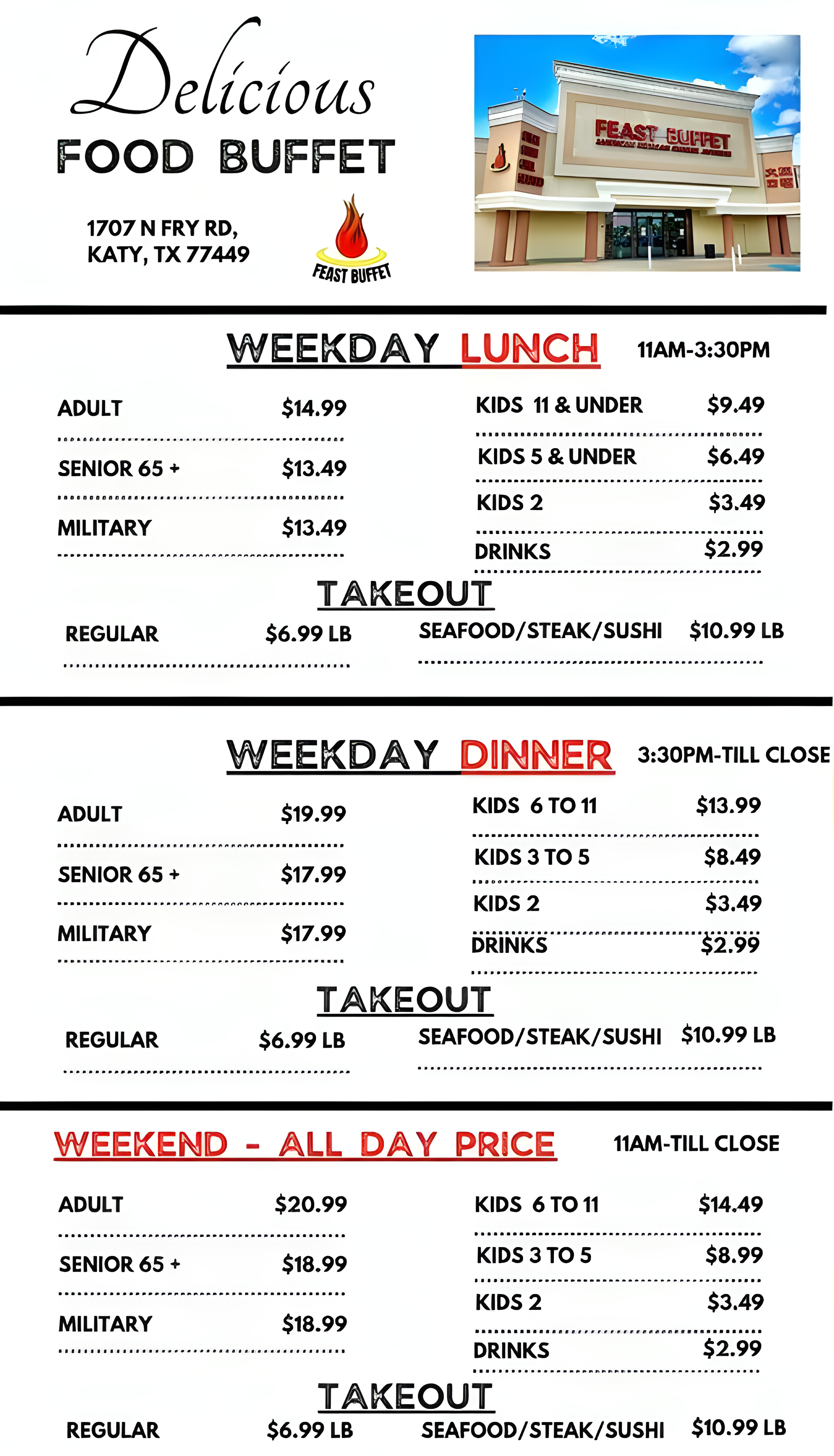
I have written before about the methods buffet managers use to fill the customer’s belly as cheaply and as quickly as possible. These include flexible menu design, low-cost, seasonal ingredients, control over the size and distribution of tableware, strategic presentation of food, rules governing sharing and waste, and a time limit for the meal. This is the paradox of the AYCE offer: the promise of unlimited consumption, subtly regulated through a set of overlapping constraints and psychological devices.
Buffets are notoriously difficult to run and earn thin margins. Many chains like Home Town Buffet, Ponderosa, Old Country Buffet, Ryan’s, and Pizza Hut have declined or gone out of business over the years, for any number of reasons, including debt, ownership churn, falling traffic, and pandemic-era restrictions. But one reason relevant to our discussion is the structural fragility of the pricing structure, as self-selection by heavy eaters can quickly swamp the patronage of families, light eaters, and friend groups whose lower consumption the buffet really depends on.
Fitness Gyms
Many fitness gyms offer an unlimited membership, allowing members to visit as often as they want for as long as they want for a monthly fee. In this case, the vulnerability stems from usage frequency: if too many members show up every day, the model breaks.
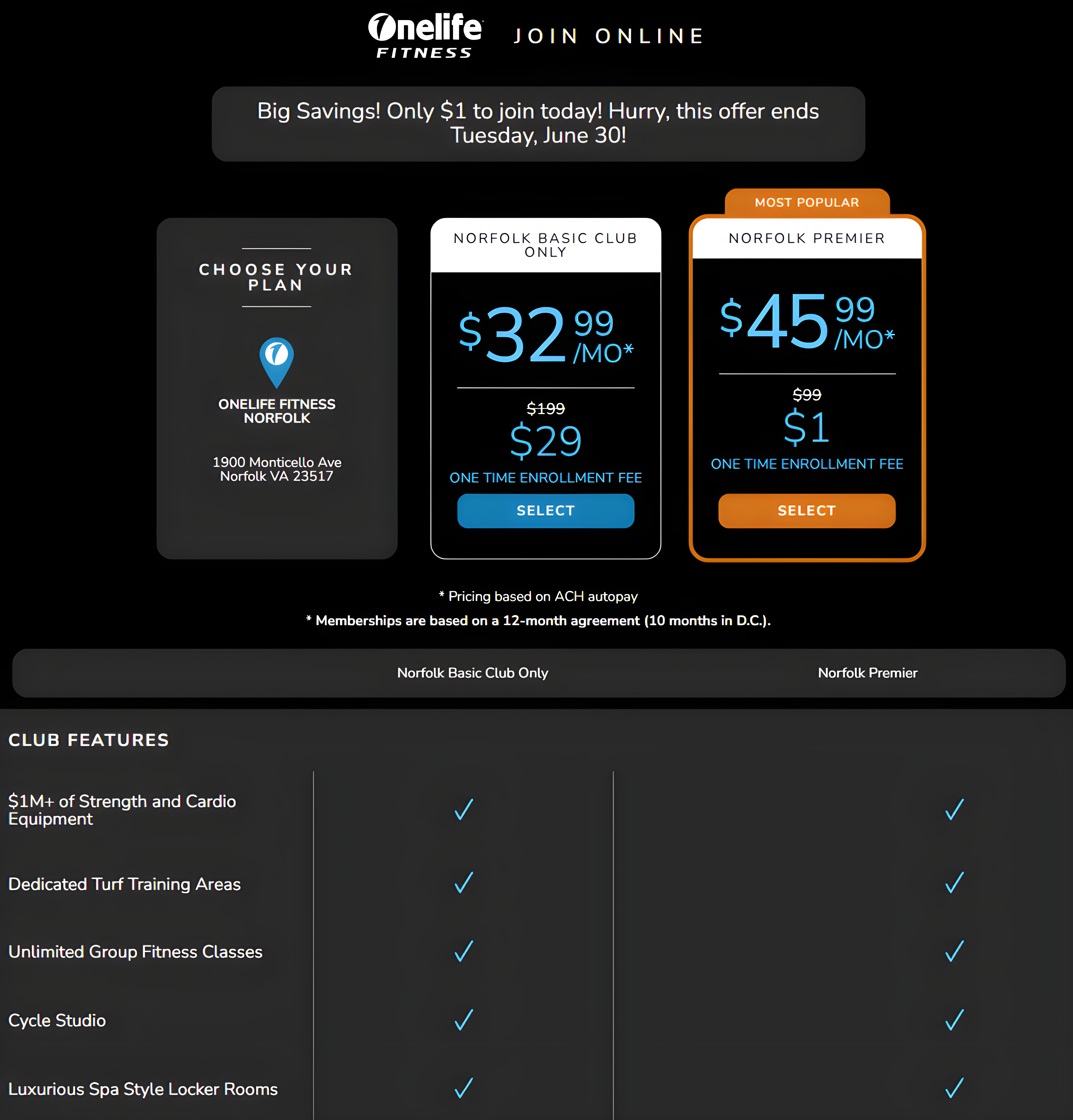
Gym members are buying access to a future self, and the seller profits when there is a gap between aspiration and behavior. Luckily for gyms, members overpredict their use and prefer the unlimited pricing structure, as illustrated from this interesting case study from Planet Fitness described by Jack Raines on Sherwood:
“One reason that Planet Fitness is so popular is its low price. A membership at one of Planet Fitness’ Manhattan locations is only $14.99 per month, but many national locations offer plans as cheap as $10.….At first glance, it appears that Planet Fitness should have an overcrowding problem… For all 18.7 million Planet Fitness members to work out for just one hour per week, gyms would need an average of 64 people (7,262 members per store/113 hours per week) exercising during all operating hours (which is from 5 am to 11 pm at most locations). For each of its members to work out at a more regular cadence, such as 4x per week, each gym would need to average 257 people working out at all times. This is more than the maximum occupancy of some locations, and it ignores traffic spikes during gyms’ peak hours that would send attendance even higher….
Representatives from Planet Fitness locations in Atlanta and New York told Sherwood that at their busiest hours, gym attendance typically peaks around 50-60 people working out at a time. Referring to the table above, if Planet Fitness were to maintain its peak attendance of 50-60 attendees all day, only 20%, or 3.7 million, of its members would be working out 4x per week. If you account for declining traffic in non-peak hours, it’s obvious that Planet Fitness attendance levels are even lower.” [Emphases in original]
Spencer Jacab summarized these statistics about Planet Fitness in a Wall Street Journal article this way:
“The “Judgement Free Zone” prefers customers who like the idea of exercise more than actual exercise. Average membership per gym has grown to 7,500. They can hold a fraction of that number. A typical facility hosts only 700 or so workouts a day, on average. Many members barely ever show up.”
As these quotes suggest, there is a perpetual tension in fitness gyms that use unlimited price offers: the more members visit and use the gym facilities, the more likely it is that the gym won’t be able to operate sustainably at any reasonable price point.
Mobile Data Providers
A third example of an unlimited offer can be found in mobile data providers, where customers choose “unlimited data” for peace of mind, knowing they don’t have to count gigabytes or worry about a surprise bill. For carriers, in contrast, unlimited pricing poses a potential network management problem because heavy users consume the most capacity at the times and places where capacity is most constrained.
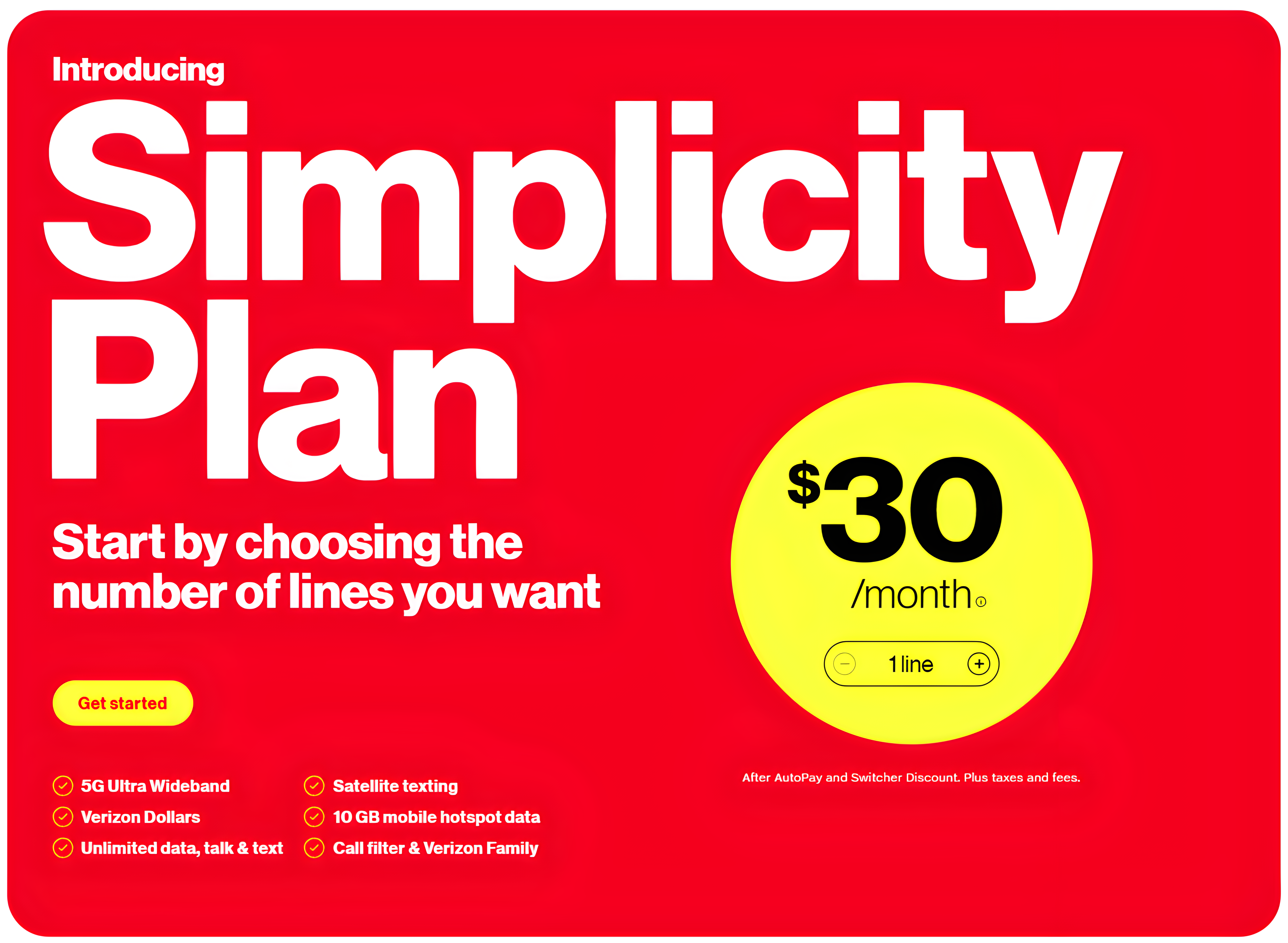
As a result, in practice, unlimited plans came with conditions. Past a certain threshold, carriers could reduce speeds, and during periods of congestion, some customers could be deprioritized. Hotspot use was often capped separately, and video quality was reduced when network capacity was constrained. The plans remained unlimited in the sense that customers were never cut off, but not in the sense most customers initially understood.
Regulators eventually challenged the gap between the explicit understanding of unlimited offers and the implicit imposition of constraints to manage capacity limits. The FTC sued AT&T, alleging that it had throttled the speeds of unlimited-plan customers after they used as little as two gigabytes in a billing cycle, sometimes slowing them enough to make ordinary browsing and video difficult to use. The case affected more than 3.5 million customers and was settled for $60 million. As a condition of the settlement, AT&T was required to disclose any speed or data restrictions prominently when advertising data as “unlimited5.” Thus, in this case, the unlimited offer was shored up and made sustainable through the careful specification and disclosure of constraints that applied only to the heaviest users.
AI Services
Finally, and not surprisingly, the same challenge is occurring for AI services using this pricing structure. For two decades, software sellers could offer unlimited use and still profit because the marginal cost of serving an additional user was negligible. Generative AI has changed this because inference incurs a significant, uncapped cost per use. A customer can pay a fixed monthly subscription fee and may consume far more than expected without abusing the service, simply by asking the model to reason longer, search more deeply, or run multi-step tasks. Customers who deem the service to be the most valuable go on to become the most expensive to serve and cost the company the most money.
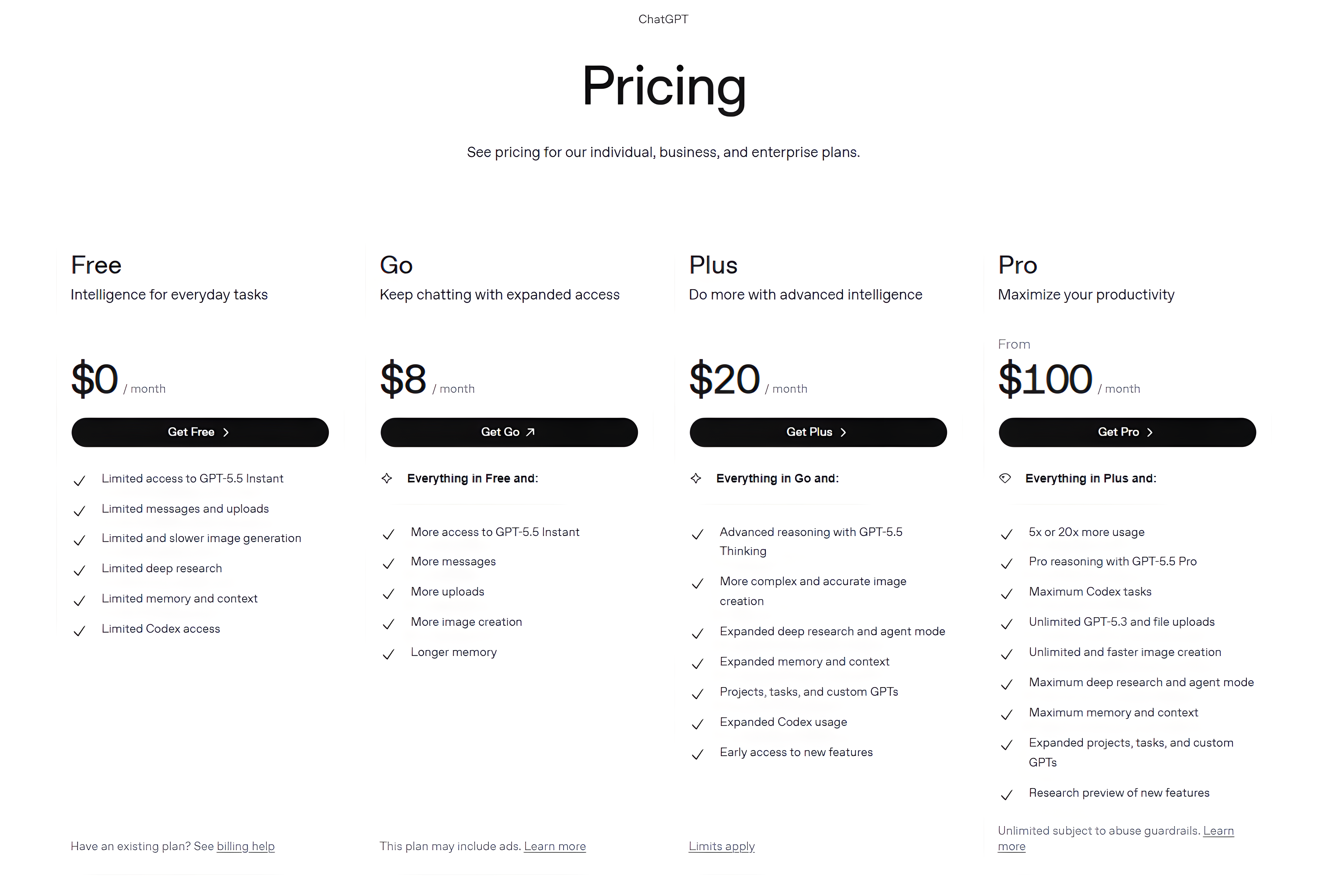
A recent analysis by SemiAnalysis estimated that a $200-per-month subscription could represent up to $14,000 of usage at standard API rates, and that providers start losing money on premium plans once utilization reaches high single or low double digits. As the author noted:
“A $200 ChatGPT Pro 20x subscription could cost as much as $14,000 in API pricing if fully utilized. Anthropic’s Claude Max 20x plan, also priced at $200 per month, has a comparable ceiling, with potential usage totaling roughly $8,000 in token costs…. Anthropic breaks even on Claude Pro and Claude Max 5x at around 20% utilization. OpenAI’s margin is thinner. It begins losing money on ChatGPT Plus and ChatGPT Pro 5x once usage climbs above 11.4%.”
Providers have responded with limits. Anthropic added weekly rate limits to its Claude subscriptions, affecting an estimated 5 percent of users, and later stopped allowing flat-rate plans to run continuous third-party agents after finding that a single session could consume thousands of dollars of compute. Cursor and Replit both reworked their pricing in 2025 for the same reason. This is why AI pricing is gravitating towards hybrid pricing structures that include a flat access fee to provide predictability for customers, plus usage limits or credits to cover marginal costs.
Four lessons for managing the vulnerability of the pricing structure
In most of these cases, the seller addresses the vulnerability in the same way, by subtly or overtly introducing restrictions or constraints, walking back on the unlimited concept. The buffet’s smaller plates, the fitness gym’s difficulty of canceling the membership, the mobile carrier’s throttling, and the AI vendor’s daily or weekly usage caps are all variations on this theme. Here again, across these different applications of unlimited offers, we see the same thing we saw with Costco’s crackdown on membership sharing—the business defending the part of its pricing structure most susceptible to customer exploitation (but also the one that most appeals to them).
The core principle I have proposed here suggests that every pricing structure has a vulnerability tied to the very feature that makes it attractive to customers, which means eliminating it is infeasible. A more reasonable goal is to understand where the pricing structure is particularly exposed, measure the size, scope, and boundaries of that exposure, and manage it as much as possible without diluting its appeal. The following four lessons provide specific actionable guidance to pricing decision makers when designing and adjusting pricing structures for their offerings.
1. Identify the pricing structure’s vulnerability
First, identify what the pricing structure invites customers to do. Every price structure makes one aspect of the offer feel especially attractive. Unlimited plans make the consumer believe that the marginal unit of consumption will cost them nothing, freeing them from worrying about their consumption. Two-part tariffs make the actual purchase feel cheaper after the access fee has been paid. Tiered plans make some feature combinations look like are providing unusually good value. These are the aspects of the pricing structure that customers will focus on and the areas where the business is most exposed. The simplest question the pricing decision maker should ask is this: If a customer wanted to get the most value from this structure, what would they do? The answer points to the vulnerability.
2. Focus on extreme customers, typically the heavy users.
Second, watch the tails, not the average. The average user can make a weak pricing structure look healthy, and the margin math look attractive. The danger usually lies at the extreme edges of the customer distribution, where extreme customers, such as heavy users, reside. A few heavy users are ok, but when the number of heavy users grows and uncontrolled mechanisms, such as social media exposure within a particular customer community, lead to a spike in these customers, the vulnerability really starts to matter. For example, Six Flags sold an all-season dining pass that, for the typical visitor, was a profitable bet on under-use. Then two men went viral explaining how they ate at the park nearly every day on the pass, living on theme-park food for pennies a meal. They provided essentially a detailed how-to guide for extracting maximum value, delivered to a mass audience. Perhaps as a result of this publicity, Six Flags later had to discontinue the all-you-can-eat plan. For pricing managers, this means that the pricing structure’s vulnerability should be monitored regularly, its impact on financial outcomes should be clearly understood and measured, and customers' reactions to company actions that manage the vulnerability should be tracked.
3. Apply restrictions or constraints on customer behaviors that are targeted and focused on managing costs.
As we have seen earlier, in every instance of customer overuse, the company responded by introducing restrictions or constraints. Noting that every such addition reduces the pricing structure’s appeal to customers and makes it less effective, it is imperative to design and impose restrictions and constraints as narrowly as possible, specifically targeting areas of overuse and exploitation. Put differently, if the business needs to add limits, the limits should focus on the customers creating the problem and remain mostly invisible to everyone else.
There are many ways to do this depending on the structure and the customer type. Examples include congestion-based slowdowns, rate limits, credits, and usage thresholds, sharing restrictions, consumption requirements, penalties for non-use, and so on. On the flip side, it also pays for the business to make the pricing structure more complex and multifaceted by introducing hybrid contingencies. A blunt cap works less well because it changes the meaning of the offer for everyone, including customers who were never the cause of the problem. A hard data ceiling that cuts off every subscriber at the same number penalizes the light user who never came close. Congestion-based slowdowns, which only affect heavy users on a busy network, do the same work while leaving the ordinary customer’s experience untouched. Thus, good limits reduce the losses from heavy users while preserving the feeling of generosity for everyone else.
4. Be open to changing the pricing structure when the vulnerability gets too large.
Either because the vulnerability is too large to begin with or because it becomes large because of uncontrollable events like the Six Flags case, the pricing structure will need to be abandoned in favor of a completely new approach. In some cases, minor changes through restrictions or constraints may not be enough. For instance, if the pricing structure keeps attracting customers whose behavior pushes unit economics into the unsustainable zone, more policing won’t help.
Take the example of ClassPass, which faced this very problem by promising its members unlimited access to fitness studios and gyms. Members embraced the service because of its core promise that they could work out at many different providers for one price. When it launched in 2013, the service provided unlimited access to gyms and workout classes for $99 per month, which was raised to $125 in 2015, and $190 in 2016. Even with this almost-doubling, the company couldn’t sustain an unlimited offer. In 2016, when the company replaced the unlimited offer with 5-class and 10-class monthly bundles, it introduced a clearly capped pricing structure. In explaining this change, the company’s CEO Payal Kadakia explained:
“To introduce as many people to ClassPass as we could, we tried an ‘Unlimited summer’ promotion in May 2014, hoping it would motivate new members to give us a try, discover boutique fitness, and perhaps fall in love with ClassPass. For every class taken, we paid our studio partners. The more classes that were taken, the more we paid. As you can imagine, our business costs increased rapidly. So we raised our plan prices in an effort to compensate — but we tried not to raise them too much. In some cities, we even had to raise our prices twice in one year, which was awful for our members and painful for my team. We simply couldn’t make the plan work for our business. The truth is there is a fundamental problem with the Unlimited plan. It can’t be a long-term membership option because it doesn’t align our business with our promise. What kind of business would we be if we wanted our members to work out less to reduce costs? We’d be sabotaging the vision at the very heart of this company.”
This is as well-articulated an explanation of the unlimited price offer’s core vulnerability as can be written. At present, AI vendors are moving in the same direction by adopting hybrid pricing structures that charge a flat fee, combined with limits, credits, or metered components, to cover the substantial variable costs of incremental usage. In a nutshell, when the customer behavior that forms the core of the pricing structure’s appeal is the same behavior that financially harms the business, the pricing structure is misaligned and unlikely to work over the long term. The challenge is to modify the structure (or choose another one) to strike a balance between customer appeal and business vulnerability.
Prelec, D., & Loewenstein, G. (1998). The red and the black: Mental accounting of savings and debt. Marketing Science, 17(1), 4–28. This is the origin of the “taximeter effect,” which is the idea that a running meter imposes a real psychological cost, separate from the money itself, by forcing the customer to feel each unit of consumption as it is incurred. It is the mechanism behind why metered pricing can spoil the pleasure of the thing being metered. Lambrecht and Skiera (2006) later folded this in as one of the four named causes of the flat-rate bias.
Lambrecht, A., & Skiera, B. (2006). Paying too much and being happy about it: Existence, causes, and consequences of tariff-choice biases. Journal of Marketing Research, 43(2), 212–223. The authors classify the bias into four effects (insurance, taximeter, convenience, and overestimation), the last of which, customers overpredicting their own future usage, is what drives so many under-users into a plan that costs them more than metered pricing would. a plan that costs them more than metered pricing would. DellaVigna, S., & Malmendier, U. (2006). Paying not to go to the gym. American Economic Review, 96(3), 694–719, provides a second, independent confirmation in a different domain, and a real-world illustration of under-users overpaying: health-club members on flat monthly fees above $70 attended 4.3 times a month, more than $17 per visit, even though the same clubs sold a ten-visit pass at $10 per visit. People bought the contract that fit who they intended to become, rather than who they turned out to be.
Edell, R., & Varaiya, P. (1999). Providing internet access: What we learn from INDEX. IEEE Network, 13(5), 18–25. The authors provide direct evidence for the cross-subsidy. Under flat pricing, light users effectively compensate heavy ones, because the marginal price of zero pushes heavy users to consume far more than they would under metering. This is the empirical underpinning of the claim that the offer’s economics depend on the under-users staying numerous enough to carry the rest.
Narasimhan, C. (1984). A price discrimination theory of coupons. Marketing Science, 3(2), 128–147. This study reports a rigorous anchor for treating the coupon as a self-selection device, such that coupons screen customers by price sensitivity, since redeeming them is worthwhile only for those who care about the lower price. It is precisely this screening logic that the unlimited price offer runs in reverse.
Federal Trade Commission. (2019, November 5). AT&T to pay $60 million to resolve FTC allegations it misled consumers over “unlimited” data promises [Press release]. https://www.ftc.gov/news-events/news/press-releases/2019/11/att-pay-60-million-resolve-ftc-allegations-it-misled-consumers-unlimited-data-promises
Utpal, good piece. Two notes from the restaurant lane where I've been working this ground for a while.
First, what you're calling "reverse coupon" is a mechanism I've taught operators for years as Reverse Discounting. Same structure — the offer self-selects the customer who costs you the most and rewards the behavior you're trying to reduce. I've mostly applied it to straight discounts and loyalty programs. You've extended it to unlimited offers and the fit is clean.
Second, the pattern where the operator introduces targeted restrictions after the vulnerability lands — smaller plates, throttling, cancellation friction, weekly caps — has a name too. I call it Consent Erosion. The terms the customer thought they bought get quietly rewritten under them. Every example you cite ends with the customer feeling like the terms changed on them, because they did. It manages the exposure but degrades the relationship in the process.
Where I'd push: I don't read the vulnerability as a property of the pricing structure. I read it as a property of the operator building a relational-sounding promise ("come, be welcomed, eat freely") on top of transactional unit economics ("every plate costs me money"). The heavy user isn't exploiting the structure. They're running arbitrage on the gap between what the operator signaled and what the operator was actually running underneath. ClassPass's Payal Kadakia named it exactly: "What kind of business would we be if we wanted our members to work out less to reduce costs?" That's not a pricing failure. That's a business-model failure that pricing was asked to cover for.
— Jeffrey